Guide · Clothing stores
Clothing store email list: seasons, boutiques and chains
Fashion retail lives by a calendar. Pitch a boutique owner in the wrong week and you are noise. Pitch in the quiet window between seasons and you are early. Timing is the whole trade.
Covers Norway, Sweden, Denmark and FinlandNot a tracked trade, so no live countBuilt around the buying calendar
Scope, and the count we will not invent
The boundary first, then the argument.
FindAndClose sells local business lists from Google Maps. We cover four countries: Norway, Sweden, Denmark and Finland. If you need a US or global clothing-retail list, we are the wrong tool, and our Outscraper review points you at a better one.
Clothing retail is not a trade we track yet. Our page set follows 27 trades, and this is not among them, so this page carries no live count. A number we cannot back is worse than an honest gap.
What runs this trade is the calendar. Fashion buys in seasons, months before the clothes reach the rail, and it discounts in fixed windows. Miss where a shop sits in that cycle and your timing is wrong before your message is even read.
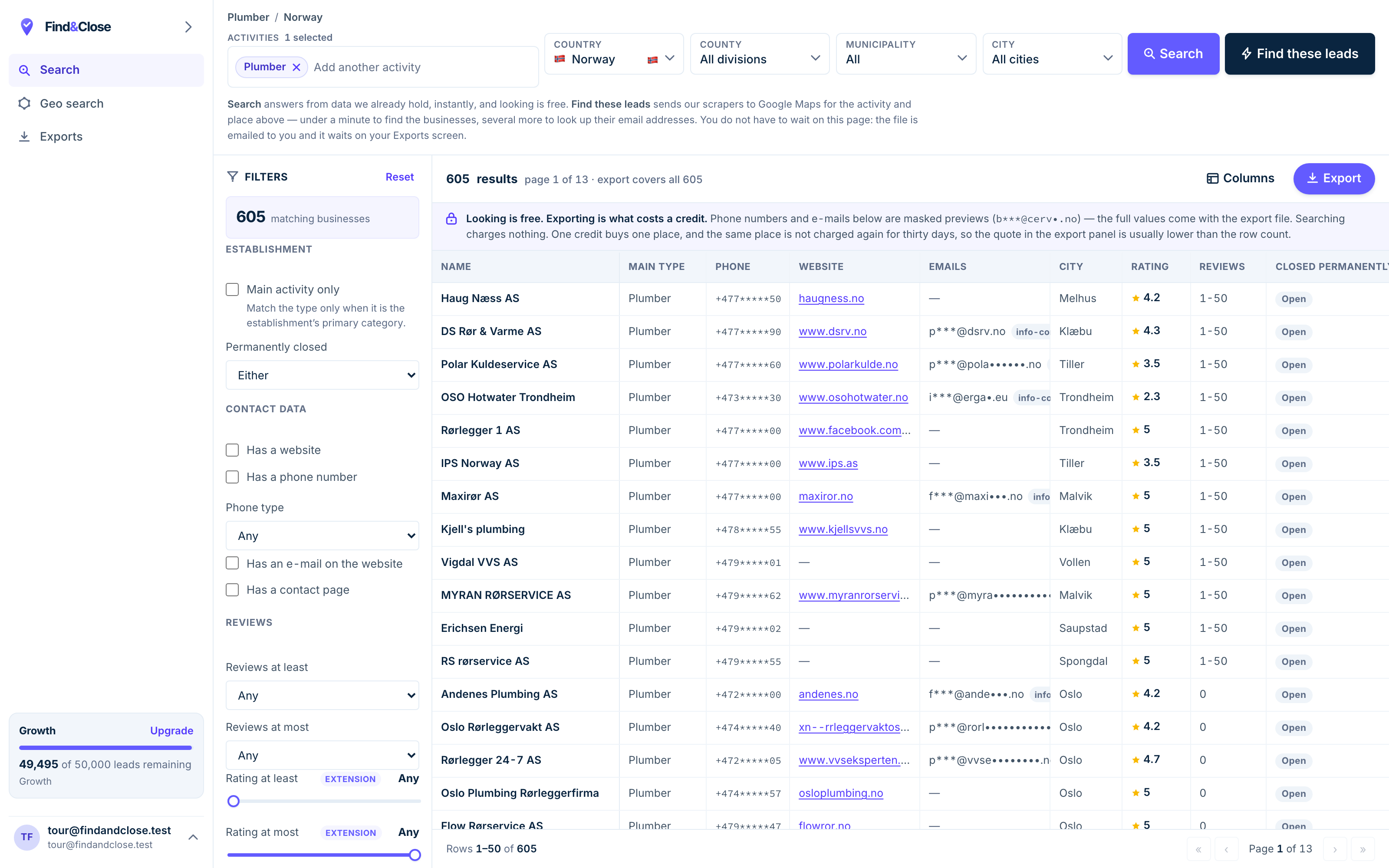
- Pick the trade Type it and take the match. One trade or twenty, on every plan.
- Pick the place Country, county, municipality, city. No plan gates the geography.
- The count moves first The number updates before you spend anything. Looking is free.
- Filter to the ones worth calling Has email, has phone, has a website, has a contact page. Combine them freely.
- Contacts are masked until export You can see a row exists and judge it. The address itself is the product.
- Export what you are looking at The file is exactly this filter set, with nothing dropped in between.
The buying calendar rules everything
A clothing shop is never at rest. It is either buying, selling or clearing, and each phase wants a different you.
The owner buys spring and summer stock in the dark of the previous winter, and autumn and winter stock in the heat of summer. The rails you see are decisions made months ago.
Then come the sale windows. The January clear-out, the mid-summer sale, the Black Friday week, the run into Christmas. In every one of those, the shop is heads-down and takings-focused. Nobody there wants a vendor.
- Peak selling and sale weeks: serve, do not sell. The floor is packed.
- Deep buying season: the owner is at trade shows and on the phone to agents.
- The quiet weeks between a season landing and the next sale: your window.
- Late winter and early autumn each hold one of those calm stretches.
Time the pitch to the calm stretch and the same message performs like a different one. Land it in the Christmas run-up and it dies unread, next to a hundred supplier emails.
The boutique owner and the chain buyer
One shop is bought for by the person at the till. The other is bought for by a team you will never email through a store.
A boutique is a single owner who is also the buyer. They travel to trade fairs, meet the wholesale agents, and pick every line themselves. Reach that person and the decision can happen over one coffee.
A chain is a merchandising team at head office. The shop on the high street is a display case for their choices. A Maps pin gives you the display case, never the team.
- Selling a wholesale line? The boutique owner is your buyer. Chains buy centrally.
- Selling a service — POS, e-commerce, payments, shopfitting? Both can buy, but the boutique decides at the till and the chain decides at HQ.
- Sort by name to split them. A repeated brand is a chain; a one-off name is a boutique.
- The independents skew toward the specialist: womenswear, streetwear, outdoor, vintage, kidswear.
The boutique end is where a cold list earns its keep. The owner buys on instinct and moves fast, and there is no committee between your pitch and the yes.
How to pull the list, and what sits inside it
No clothing count from us yet — but the app holds the real number, and the country rates set your expectations.
The app searches Maps categories past our tracked set, clothing retail included. Pick the category and a country, and the count shows before you export.
Read it against what we do publish.
- Email coverage across our tracked trades: Norway 38%, Sweden 19%, Denmark 17%, Finland 16%.
- Clothing is a visual, social-led trade, so expect strong Instagram and Facebook columns in the export.
- Many boutiques sell online too, which tends to mean a published contact address.
Plan an email leg for the shops that publish an address, and a warm-up leg over their social channels, which you run in your own tools. The find business emails guide ranks the ways to fill the gaps, and names the failure rates.
A between-season cadence for boutique owners
Written for someone selling a wholesale line, a POS or an e-commerce tool to independent clothing shops. Keyed to the calm week, not a day counter. Run it in your own tool — we build the list, we send nothing.
-
Subject before your next buying season
Hi. I found [shop name] on Maps, and the [detail you saw, like their Instagram or their window]. I work with independent clothing shops on [your offer in one line].
I am writing now on purpose, in the quiet week before you start buying again.
Worth a look? If not, reply stop and I will not write again.
Naming the quiet week proves you know the trade. You are reaching the owner in the one stretch when they are neither buying nor clearing, and can hear you.
-
Call late morning on a weekday, after the shop opens and before the lunch browsers arrive.
One question: what did you wish you had in place for the last sale season?
Every owner has an answer, and the answer is your opening.
A boutique owner replays the last sale in their head for weeks. Asking about it meets them where their mind already is, and skips the pitch.
-
Subject the whole thing on one page
Everything in one place: what it does, what it costs, and how fast it is set up.
Set-up finishes before your next season lands, so it is ready when the new stock is.
If it is a no, reply stop and I will close the file.
A dated promise — ready before the season lands — turns a vague maybe into a calendar decision the owner can actually make.
-
Subject closing your file for this season
I will close your file now, so you can get on with the buying.
If the next sale exposes the gap, my number is below. Good luck with the new range.
A clothing owner thinks in seasons, so the breakup points at the next one. If the coming sale hurts, this is the note they dig out.
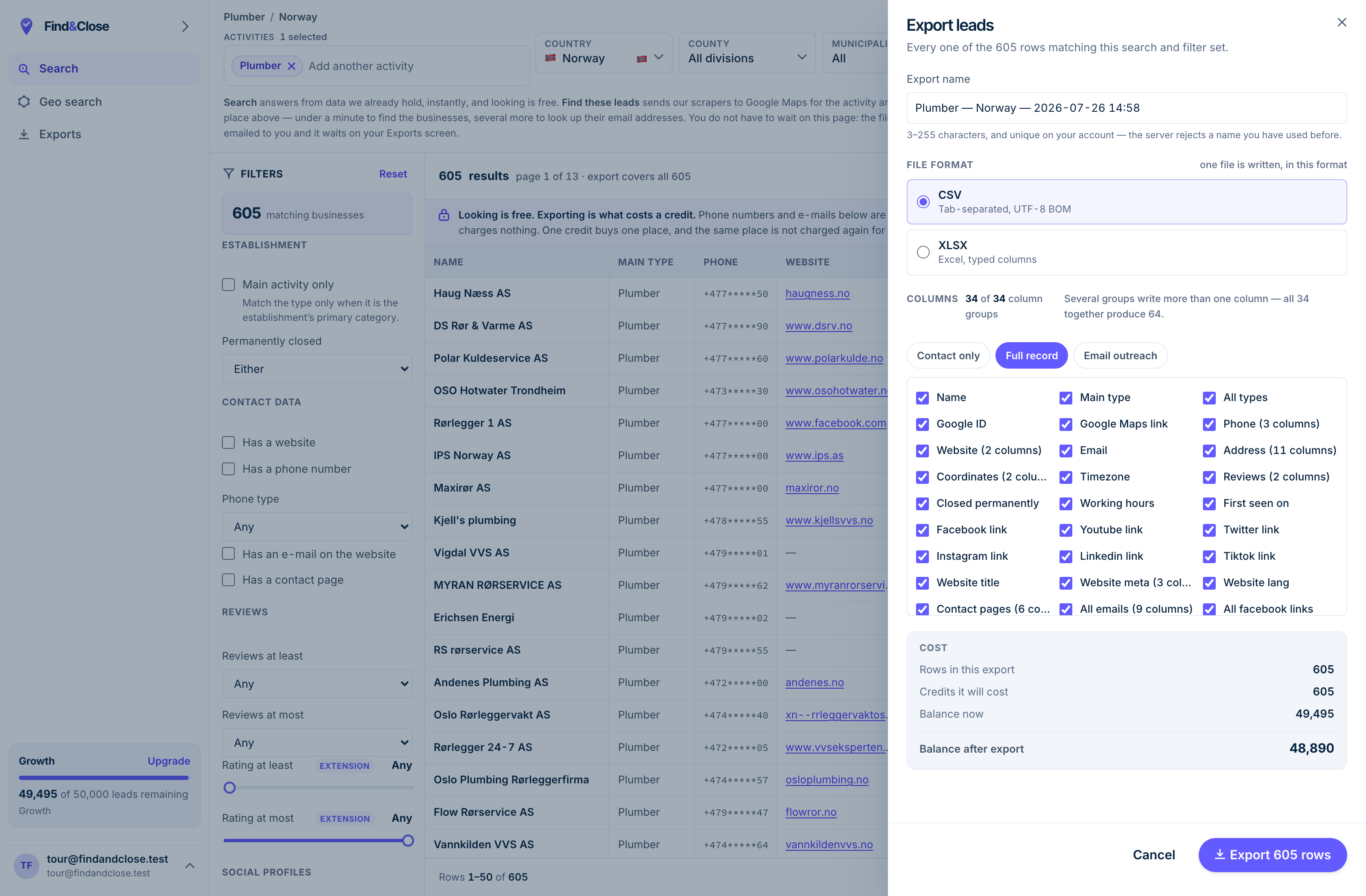
- It exports the whole result Every row the filter matched, not the page you happen to be looking at.
- CSV or XLSX Tab-separated UTF-8, or typed Excel columns. One file per job.
- 34 groups, 64 columns The same 64 on every plan. Nothing is held back for a higher tier.
- Three presets Contact only, full record, or the outreach set. Or tick your own.
- The cost, before you commit One credit per place, once per 30 days. Re-downloading is free.
Questions about clothing store lists
When is the best time to pitch a clothing shop?
The calm weeks between a season landing and the next sale. Late winter and early autumn each hold one.
The worst times are the sale windows and the Christmas run-up. The floor is packed and no owner will read a vendor email.
How do I tell a boutique from a chain in the file?
Sort by business name. A brand that repeats across towns is a chain, bought for by a head-office team. A name that shows up once is a boutique.
The boutique is where a cold list pays. The owner is the buyer, and the decision needs no committee.
Why is there no clothing count on this page?
Clothing retail is not one of our 27 tracked trades yet, and we only publish counts our own file can back, with a date on them.
The app still searches the category. Pick it, pick a country, and the number shows before you export.
Who buys a clothing store email list?
Wholesalers and brand agents chasing rail space. And service sellers: POS, e-commerce, payments, shopfitting.
All of them do best with the independents, where one owner decides and moves fast.
Do clothing shops even respond to email?
The visual, online-selling ones publish an address and read it, because taking web orders is already part of the day.
For the rest, warm up over their social channels first, in your own tools, then follow with a short email. This trade lives where its customers scroll.
Go deeper
The country hubs, and the guides for the campaign itself.
- Local business leads: Sweden Every tracked trade, counted
- Local business leads: Denmark What we publish, and what we do not
- Email list by industry Pick your trade from the index
- Find business email addresses Seven methods, ranked and honest
- Which trades publish an email Coverage by trade, from our crawl
Pull the clothing file in the quiet week
Fourteen days, 100 leads, no card. Enough to sort boutiques from chains and line up a between-season cadence.
- 14-day free trial
- 100 leads included
- No credit card